


Discipline
UX Research & UI Design
Platform
Mobile
Timeline
UXL Designathon, March 2025 · 36 hours
The Team
- Sumayyah Khalid
- Tiwi Lanre-Adisa
- Amber Alim
- Allissa Lorenzo
My Role
The four of us researched together. The pieces I led were the survey, the wireframes, and the prototype.
01.Context
Everyone's listening to the same music, alone
Music is one of the most shared things there is, and most of the time we experience it through headphones with nobody else in the room.
Streaming made every song available to everyone instantly, and it also made listening a private act. Your favourite album is somebody else's favourite album, and neither of you will ever know.
Meanwhile live music is happening a few blocks away most weekends, often to a half-empty room. We wanted to understand why the gap between those two things is so wide.
02.Research
People want to go out. They don't know where or with who.
We surveyed 26 people with rated statements rather than open questions, so we could see which feelings were strongest rather than which were easiest to describe.
Two results sat at opposite ends of the scale, and the gap between them is the entire product.
0
out of 5: wanting more local live events, the highest-rated statement in the survey
0
out of 5: preferring to bond over music online rather than in person, the lowest
0%
described themselves as casual followers rather than superfans
The barrier respondents ranked first wasn't cost or transport. It was the difficulty of finding like-minded people to go with. They also told us how they currently hear about shows: Instagram and word of mouth, not ticketing sites or event listings.
Nobody is choosing to stay home. They want the live thing and they don't want it online, but going alone is the only option on offer.
03.Problem
Discovery isn't the hard part. Company is.
Finding a show takes thirty seconds. Finding someone to go with is what actually stops people.
Every existing product solves the first half. Ticketing sites list events, algorithms suggest artists, streaming services build you a playlist. None of them help with the part our respondents actually ranked hardest.
PROBLEM STATEMENT
04.Ideation
Our first version ended at the venue door
A mentor session mid-designathon pointed out that we had designed the easy half of the night and stopped.
We came in with matching and event discovery. Find someone with your taste, find a show, go. Our mentor asked what happens after the encore, and we didn't have an answer.
FROM THE MENTOR NOTES
It reframed the product for us. If the whole point is meeting someone new, then the riskiest moment isn't the show, it's standing outside at 11pm with a stranger and no plan. Designing for that moment is what makes the matching feel safe enough to act on.
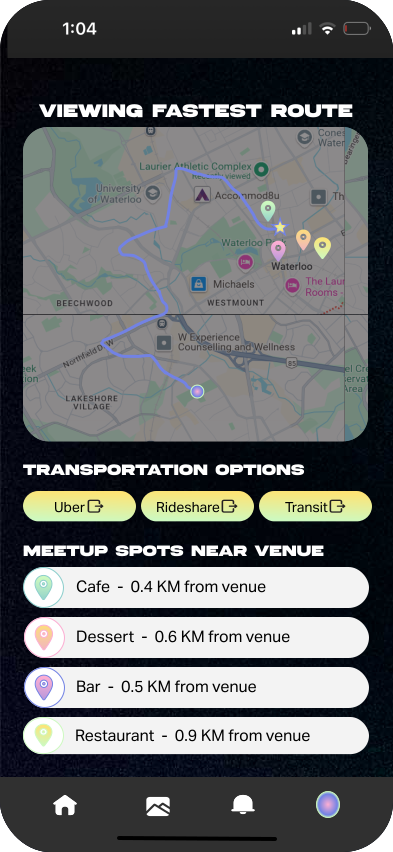
Transport options and the route home, added after the mentor session
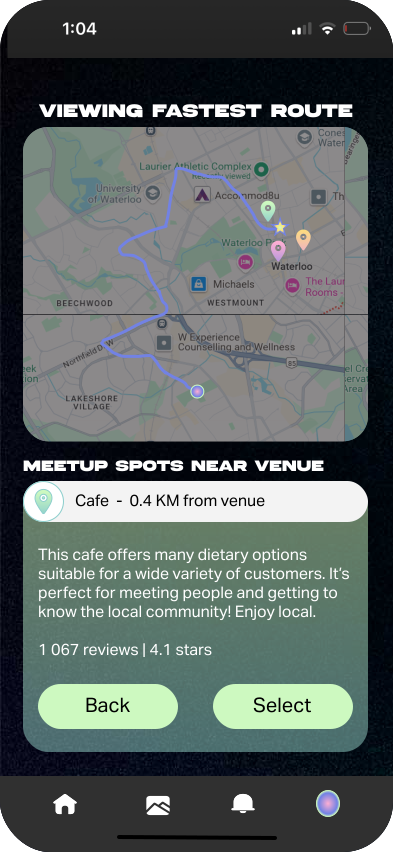
Meetup spots near the venue, with distance and what each place is good for
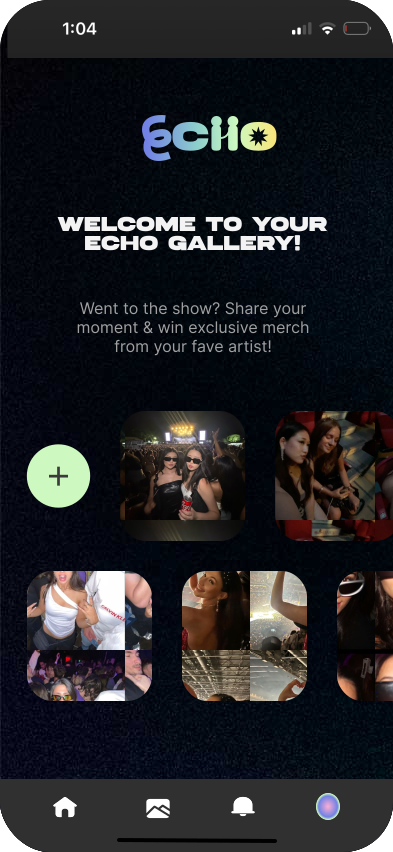
The Echo Gallery, where the night keeps going after you leave
The second note was about simplifying the user flow, and that one was about our own presentation as much as the product. We were trying to show every screen at once. The fix was to focus the main flow and move the detail somewhere else.
05.Solution
Find the crew, then find the show, then get home
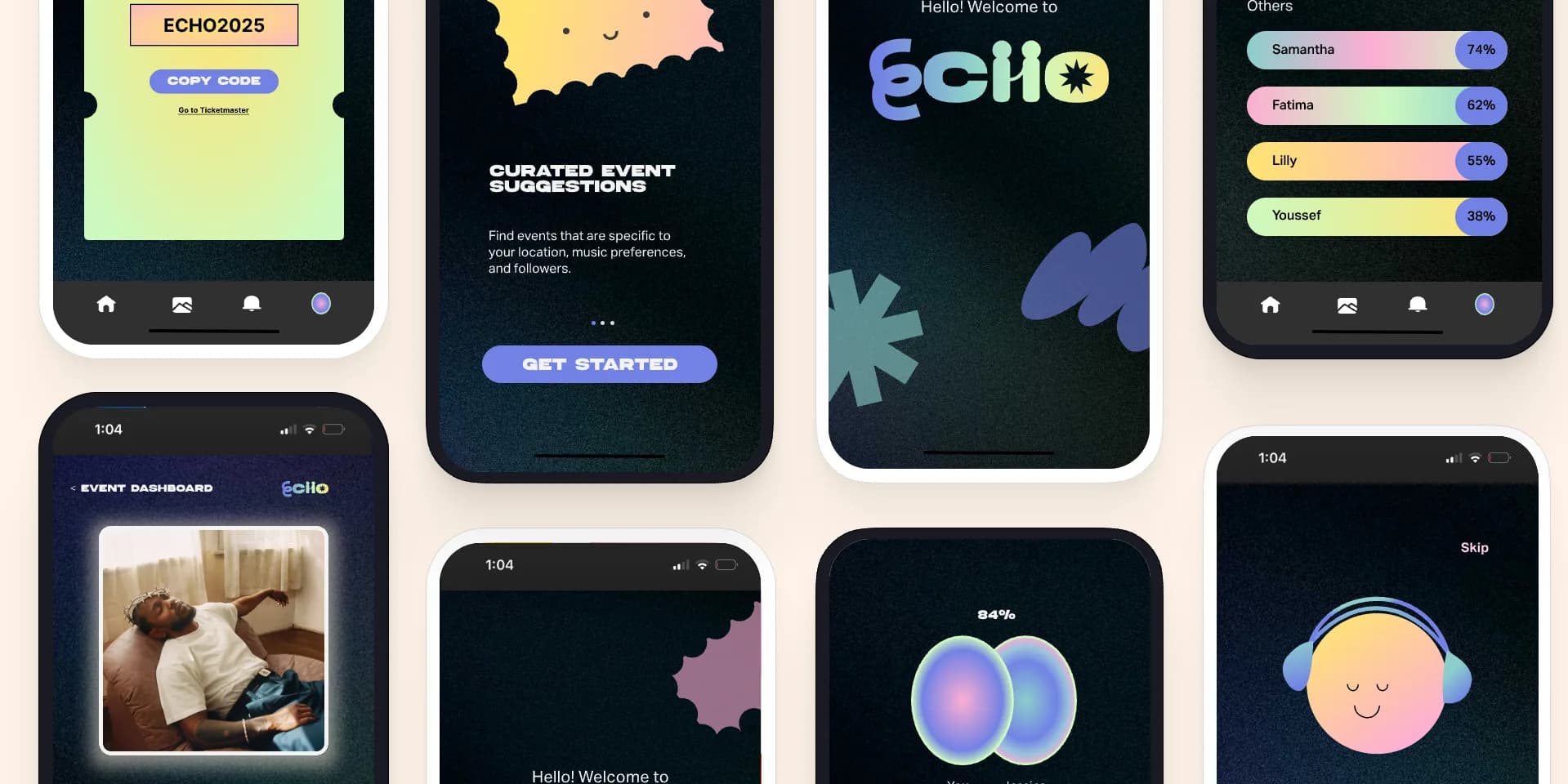
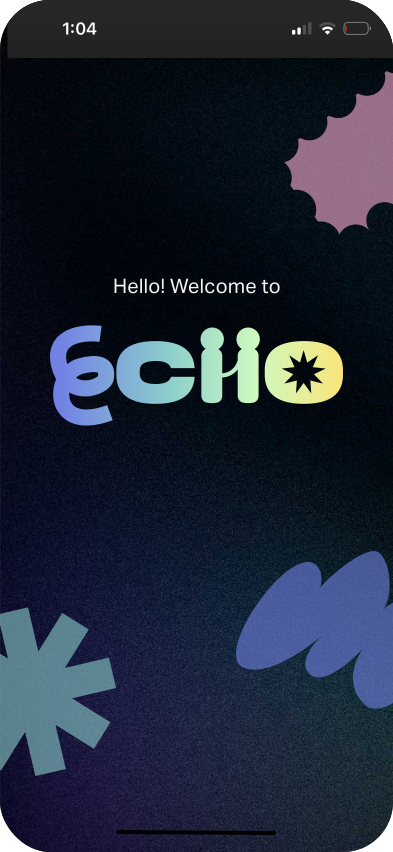
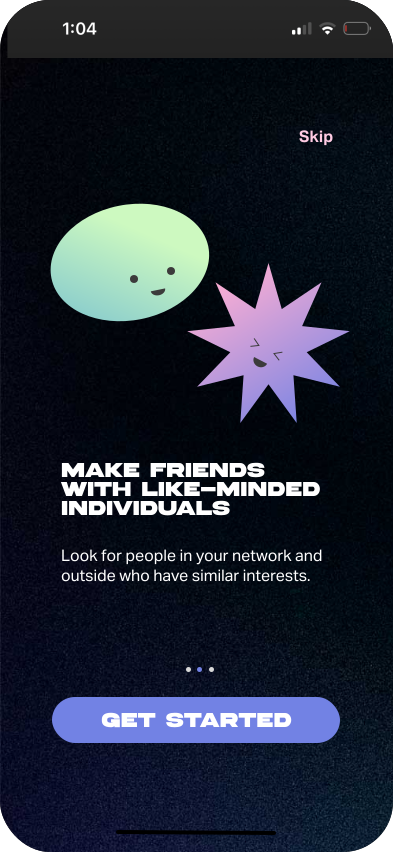
Echo pairs local event discovery with a way to meet people whose taste actually overlaps with yours, and follows the night all the way through.
SEE YOUR AURA
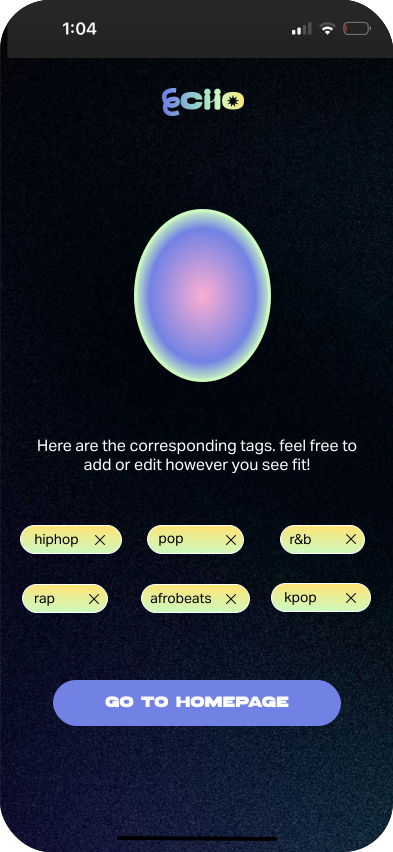
OnboardingYour listening becomes a visual identity rather than a list of artist names. It gives people something expressive to compare instead of a follower count, and the genre tags stay editable so you're not stuck with what the algorithm decided about you.
FIND A CREW
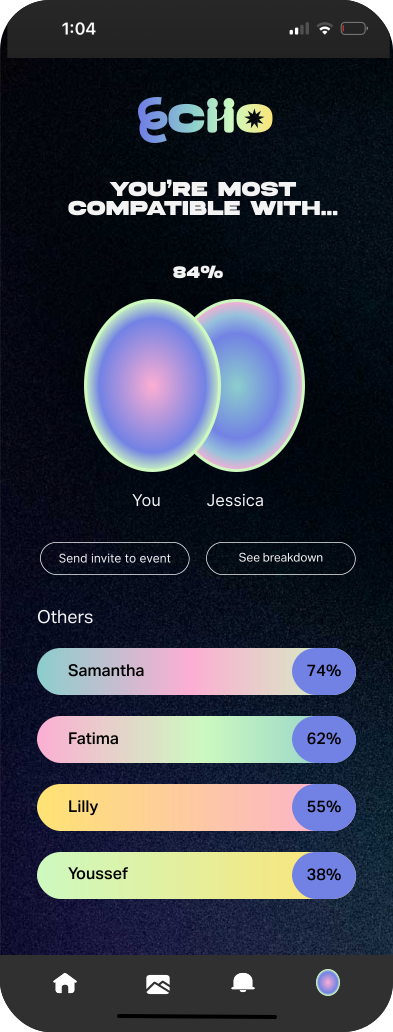
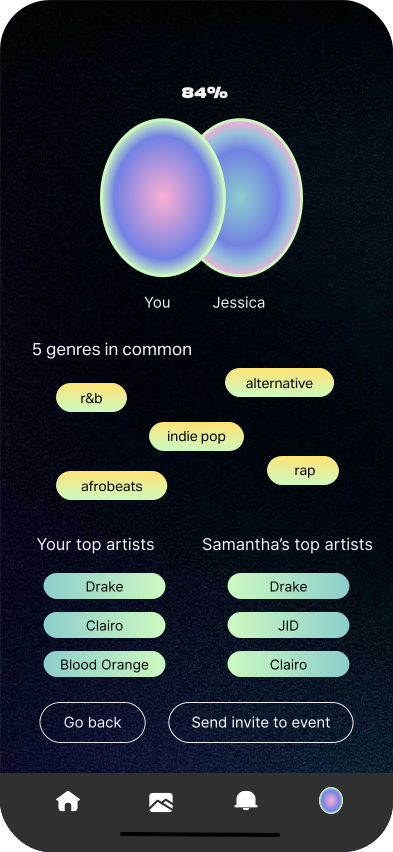
ConnectionMatch with people in and outside your network who share your taste. Compatibility is shown as two auras overlapping, with the genres and artists you have in common underneath, so a number always comes with a reason.
LOCAL EVENTS
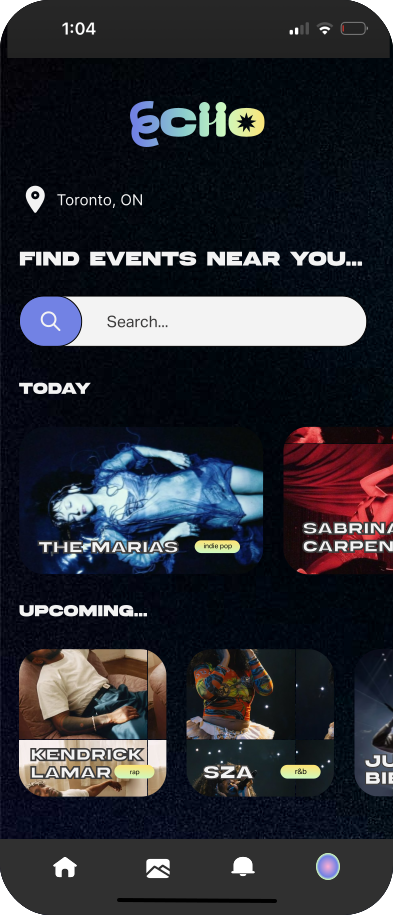
DiscoveryShows happening near you, split into today and upcoming, surfaced the way our respondents said they actually hear about them: through people, not listings.
THE NIGHT AFTER
AfterRoutes home across Uber, rideshare and transit, plus meetup spots near the venue sorted by distance. The part most event apps leave to you.
THE ECHO GALLERY
RetentionPost from the show and keep the thread going with the person you went with. The reason to open the app again on Monday.
06.Design Decisions
What we chose, and what we gave up
Most of these trace directly back to a number in the survey.
We built for casual fans, not superfans
62% of respondents called themselves casual followers, so that's who we designed for. It meant cutting anything that rewards depth of knowledge: no stats, no top-artist rankings, no listening streaks. The cost is that superfans are the most motivated users of any music product, and we deliberately made the app less interesting to them.
Meeting people comes before browsing events
Wanting more local events scored 4.54 and bonding online scored 2.92. Discovery alone would have been the easier product to build and the one nobody needed. Leading with matching means the app is close to useless until enough people in one city are on it, which is a real cold-start problem we didn't solve.
An aura instead of a profile
A conventional profile turns taste into a leaderboard, which is exactly what puts casual fans off. A visual aura gives people something to compare without implying one person's listening is better than another's. It's harder to read at a glance than a list of names would be, so we put the shared genres and artists underneath the match rather than replacing them.
The night doesn't end at the venue
Adding transport and meetup spots meant building screens that have nothing to do with music, which is a strange thing to put in a music app. We did it because the product asks strangers to spend an evening together, and it would be irresponsible to design that without designing how they get home.
Discovery follows Instagram and word of mouth
Those were the two channels respondents said they actually use, so the feed mirrors how a friend tells you about a show rather than how a ticketing site lists one.
07.Reflection and Next Steps
What I'd take further
The survey shaped this project more than any other decision we made.
Rating statements rather than asking open questions was the right call. If we had asked people what stops them going to shows, we would have heard money and time, because those are the easy answers. The rated format surfaced the thing they wouldn't have said out loud, that they don't have anyone to go with.
The mentor session is the reason this is a product and not a feature. We would have shipped the matching and the event feed and called it done. Being asked what happens after the show is what turned it into something that covers a whole night.
The cold start is the unsolved problem. Echo only works if enough people in one city are already using it, and we designed the product without designing the thing that gets it off the ground.
I'd also want to know whether people would actually message a stranger about a concert. We assumed shared taste is enough of a bridge, and 26 survey responses can tell you people want company, not that they'll accept it from someone they haven't met.